Swiss Life
Make governance work. Strengthen digital resilience.

From KAIT to DORA: turning requirements into effective governance
Who does what under DORA, and how can you tell whether a control works?
The transition from KAIT to DORA brings governance, IT, information security and risk management closer together. I start with a practical question: which process does each requirement apply to, and who can show it has been implemented?
At Swiss Life Asset Managers Germany, I review existing policies and controls. I link requirements, responsibilities and evidence, so the teams can identify gaps and prioritise actions by risk.
- Project context
- Swiss Life Asset Managers Germany
- My contribution
- Turn DORA requirements into roles, controls and evidence
- Objective
- A common framework for managing ICT risk

approx.
Employees in Germany · Bring governance, IT and risk management together around shared requirements and clear responsibilities.
Expertise in Germany

Offices in Germany · Develop consistent controls and traceable evidence across locations.
Shared framework

Embed governance
Turn DORA requirements into clear responsibilities, workable controls and reliable evidence.
Works in practice

01 · OBJECTIVES
Project objectives
The aim is to develop governance that makes DORA requirements easier to interpret and apply in day-to-day work. Existing policies, responsibilities and controls are to be brought together in a coherent ICT risk management framework.
The focus is on connecting requirements with real workflows. The framework should guide teams while keeping each function’s responsibilities clear.

02 · IMPLEMENTATION
Approach
- Review existing policies and controls against the relevant requirements.
- Clarify responsibilities and interfaces between governance, IT, information security and risk management.
- Bring actions, control descriptions and evidence together in a consistent format.
- Include ICT third-party risks and work with providers in the governance framework.
A shared view of requirements, risks, responsibilities and evidence is intended to reveal dependencies and help the functions coordinate their work.

03 · CHALLENGE
Challenge
Teams across functions need a consistent understanding of regulatory obligations and how to put them into practice. Each documented requirement needs an operational owner and evidence that the control works. Policies alone cannot provide reliable oversight.
Regulatory obligations, technical implementation and control evidence need to fit together. The governance framework should give teams clear guidance where these responsibilities meet.

04 · IMPACT
Expected benefits
The aim is a shared framework for decisions, risks and controls. Clear ownership and consistent evidence should make coordination easier, improve visibility and support targeted improvements. Success depends on whether the framework is understandable and verifiable in everyday work.
Individual policies can then form a coherent approach to oversight. Mapping requirements to evidence can also help teams identify improvements and set defensible priorities.
PROJECT BACKGROUND
Context and implementation
Project context
Swiss Life Asset Managers Germany operates in asset management and real estate. Its services include development, asset, portfolio and fund management, and pension solutions. The company reports around 700 employees at seven German locations.
This is the setting for my work as Senior Governance & Regulation Manager. The case study focuses on linking regulatory requirements with governance structures that teams can use.
My contribution
In my role, I interpret regulatory requirements and connect them to processes, roles and traceable records. I start with existing policies and controls, reviewing the interfaces with IT, information security, risk management and business teams together.
I focus on mapping requirements, owners, actions and evidence. I prioritise by relevance and risk. Control descriptions should show what is checked, who is responsible and how the check is recorded.
Starting point
The move from KAIT to DORA broadens the focus from IT requirements to digital operational resilience. This makes coordination between ICT risk management, provider oversight and the responsible functions more important.
The task is to develop existing structures by interpreting requirements, clarifying handovers and connecting documentation to actual work.
Expected impact
The aim is a defensible link between regulatory obligations and operational implementation. The framework should make gaps and responsibilities visible and support decisions with traceable information.
Controls and audits should clearly show which requirement is addressed and which evidence supports it. The measure is whether controls actually work. Regulatory changes and control findings should inform future improvements.
Further reading
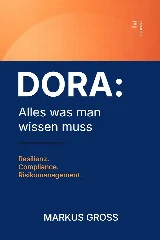
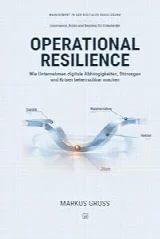
Operational Resilience
How organisations manage digital dependencies, disruption and crisesDIGITAL GOVERNANCE, REGULATION & RESILIENCELet’s stay in touch
Would you like to discuss any of these topics?