
Review ICT capacity
Measure peak load and technical impact.
EVIDENCE
SAMPLE
Connecting a technical indicator with the performance for the department
A reliable proof of operation explains how the service responds to peak loads. It combines the performance requirement of the business side with observed values, responsibilities and an audited response path.
At endload, individual server values can be within the target range while payments wait long. Therefore, select a professional measurement point and determine when a deviation requires a reaction. Link the load history to the actual observed effect of the measure.
Work steps and verifiable documents
Define the measurement size and operating status
Choose a measure with a technical impact, such as waiting time per incoming payment. Set the measurement location, measuring interval and internal action limit for peak and regular operation.
- Acceptance criterion
- Use the same metric, population and unit for expected and observed results. Record the measurement point at which the business service is achieved.
- Evidence
Measurement definition with business reference, baseline and agreed limit value.
Document increase and reaction
Watch the course during a typical load window. Arrange warning message, assignment, measure and return to the target area in time.
- Acceptance criterion
- A second reviewer can follow the statement to the original evidence and the version checked. Record the evidence identifier or file reference with the decision.
- Evidence
Related time from warning to control of effects.
Plan borderline cases
For tight-scale services, determine the point where additional capacity or business decision is required. Check whether the escalation path is accessible during operating hours.
- Acceptance criterion
- Compare the observed bottleneck with the documented capacity limit. The record and operating instruction must show when the response starts and who is notified.
- Evidence
Released action plan with owner and re-scheduled.
Decision in the test example
The payment acceptance is slower at the end of the month. A CPU value is below the warning threshold. The queue at the input is still too long and blocks the agreed processing time.
- Compilation of documents
- Compare server measurement and business waiting time in the same load window. The test file records source, threshold value and the remeasured response time after an adjustment.
- Keeping a decision
- The following monthly run shows the time of increase, the triggering of the warning and the effect of the planned capacity measure.
- Complete the test file
- Time-related capacity files with load profile, response path and proven service status.
- Sample and acceptance
- Select a load window with technical delay. Check whether the team has detected the operating status based on its agreed measurement size.
- Audit record
- Measurement record with baseline population, source, expected and observed values, unit and timestamp.
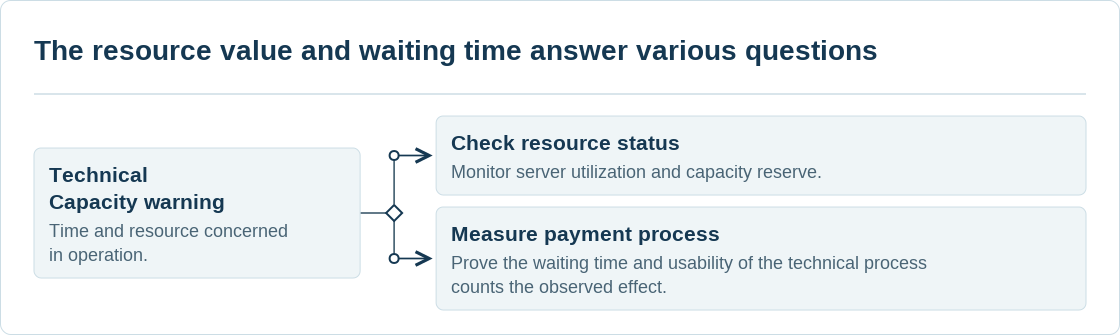
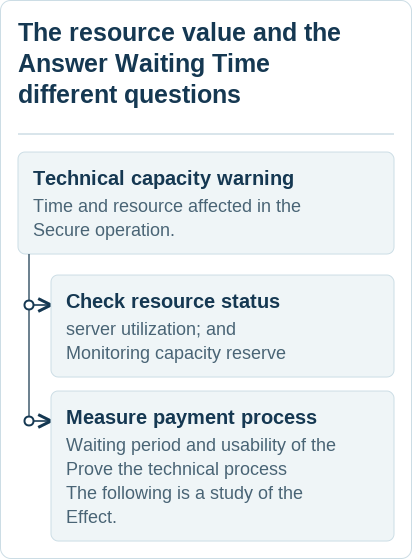
The state of service needs a technical measuring point
Compare the technical operating value with the state of payment service. The two observations answer different questions.
Templates and worksheets
The filler tool is directly under the task. Download the template for editing or open the Quick View.
Capacity planning sheet
Measure capacity reserves and thresholds under representative peak and replacement loads.
Outcome Decision on the released load including bottleneck, early warning threshold and follow-up.
Read the instructions
Fictional example In a peak phase, the application processes 780 operations per minute. On the replacement path there are 610. 610 operations on the replacement path remain under the approved requirement.
- Evaluate measurement Enter the same unit for target and is. Set the direction of assessment and complete the professional sample.
- Linking Evidence For relevant checkpoints, deposit the specific source, the verified version and the proof ID.
- Treatment of deviation Determine the bottleneck and repeat the load test with unchanged profile after adjustment.
Legal basis for this task
ICT risk management · (EU) 2024/1774 · Art. 8 · ICT operational processes
The articles on ICT operations specify specifications for documented operating processes.
For your exam Arrange reaction measures to an audited procedure.
ICT risk management · (EU) 2024/1774 · Art. 9 · Capacity and performance
Article 9 addresses capacity requirements, resource use and monitoring.
For your exam Compare the measurement with the intended course of action.

What is the next decision?
Compare the next load window with the checked status. In the dossier, keep together the technical measurement value, operational response and change after the measure.
ICT operation and protection
Arrange applications, data and external services of a business function. Then select a specific sample, such as a controlled memory change or the withdrawal of an authorisation.
Your result Inventory status with technical reference and documented control test.
Detection dossier
Test job, original sample, version reference, correction and documented retest.
Link target criterion, drawn sample, findings and retest. The memory example shows which protocols prove the effectiveness of alarming to the checked status.
Work result A dossier in which a third party monitors expectations, observations, findings and conclusions per test criterion.
Your result A dossier from which another person can repeat the same sample.

