
Document a suspected online exam incident
Check what an unexplained AI note does when deciding on an examination.
EVIDENCE
APPROVAL
Starting position and test order
A fictitious university is examining a system that marks alleged illegal behaviour in online classifieds. The examination regulations provide for a separate substantive examination on each suspicion. The system is intended to provide information, the grade is determined by the examiner.
In an exercise with 20 synthetic sessions, four clues are wrong. The team can dissolve three of them in the original view. The fourth is taken over by the note export, although a teacher cannot see it yet. The exercise rule requires 20 out of 20 cases without any unchecked effect on a result.
Compare baseline values
Protection against unaudited evaluation
- Scale
- 20 of 20 meetings
- Observed
- 19 of 20 meetings
Misalarms in original clarifiable
- Scale
- 4 Checking false alarms
- Observed
- 3 dissolved in original
Acceptance of open suspicion
- Scale
- No unchecked export
- Observed
- 1 Note in note export
Check and prove
Prove purpose and event
Compare the actual suspicious recognition with the digital audit supervision set out in Annex III. Determine time, affected university process and released use.
Testable evidence The purpose sheet with the examination function and a well-founded classification.
- Acceptance criterion
- Justify applicability using evidenced activity or intended use, role and date. Assign an owner and due date to any unresolved assumption.
- Evidence
- Reasoned applicability assessment recording facts, reference, role, date and open assumptions.
Untested effects count
In each of the 20 sessions, check whether a suspicion passes into the examination of benefits before the teacher can look in the original.
Testable evidence Test protocol with unchecked export, affected session and original receipt.
- Acceptance criterion
- Use the same metric, population and unit for expected and observed results. Record the measurement point at which the business service is achieved.
- Evidence
- Measurement record with baseline population, source, expected and observed values, unit and timestamp.
Removing suspicion and protecting results
Remove the incorrect hint professionally and repeat the export. Check whether the detection chain remains open even if the original is locked.
Testable evidence After-test for withdrawal, issuance and protection against unenforced evaluation.
- Acceptance criterion
- A second reviewer can follow the statement to the original evidence and the version checked. Record the evidence identifier or file reference with the decision.
- Evidence
- Evidence list recording original source, version, documented mapping and owner.
What the test results
Situation A fictitious university is examining a system that marks alleged illegal behaviour in online classifieds. The examination regulations provide for a separate substantive examination on each suspicion. The system is intended to provide information, the grade is determined by the examiner.
Model decision and justification
The function is to detect alleged unauthorised test behaviour and the case must therefore be examined on the basis of the corresponding position in Annex III. Classification depends on the actual purpose and effect of the procedure.
The university is blocking the export audit. Three resolved false alarms show a functioning test path in individual cases. The fourth indication had already untested influence. Only a repeated export with documented lock can conclude this finding.
Counter-sample and impact
Make sure that all 20 sessions are exported without unchecked entry. Keep removing the original access from the fourth false alarm. Export protection exists and professional information remains open as a separate finding.
- Audit record
- Comparison of the original finding and retest showing the changed condition, observed effect and closure decision.
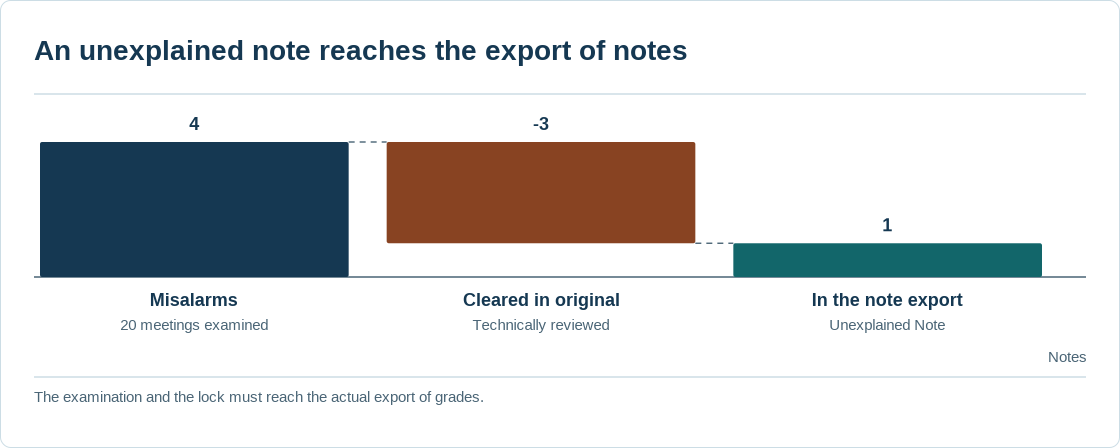
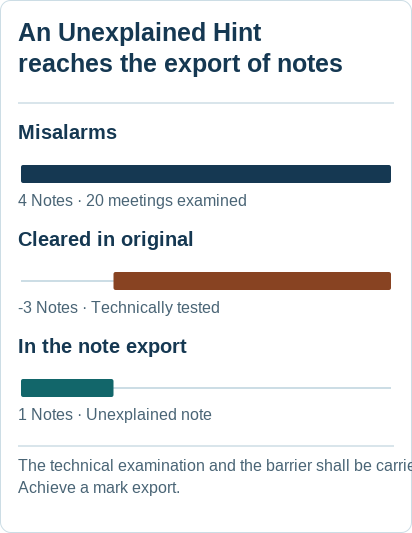
Follow the unexplained note until export. The number of correct checks does not yet show that the export is protected.
Documenting the test bench with your own data
A reasoned classification and technical clearance decision on the suspected process.
Limits of use and effective decision-making
Compare the actual use with the confirmed purpose. Document exceptions and effects before introducing or modifying.
Outcome A classification and acceptance note with case numbers, actual effect and open question of law or role.
Read the instructions
Fictional example The university is examining 20 meetings. An unexamined reference to the export of grades is being used in one session, thus making 19 out of 20 cases of documented protection.
- The starting position Function, Affected and Responsible Role
- Editing the Process Per case group, record the target and observed effect
- Secure Decision Release the professional test and legal classification separately
Official sources
Regulation (EU) 2024/1689 as amended on 27 July 2026
Readable version with the changes made by Digital Omnibus on AI. The application rules are to be read for your own deadline.
Annex III · High risk operational categories
Compare the actual purpose with the concrete number and letter. Check the relevant version and Art. 6 separately.

What is the next decision?
First, take the decisive observation from the case. Then, based on your open question, choose whether you want to check your own process or play a comparable case.
Check your own operation before restarting
They use a high-risk AI and must decide before or after an incident whether the technical process can continue.
Start with the application protocol and the last confirmed procedure. Check also on the follow-up test whether the suspension is effective in the associated specialist procedure.
Work result A reasoned re-start decision with confirmed version, responsible person and evidenced effect of the intervention.
View the guideDigital Audit Supervision
Transfer the decision to your own use.
Starting point Confirmation of purpose, reference to 20 exams, access documents and export of notes.
Work result A reasoned classification and technical clearance decision on the suspected process.
View the guide

