
Recover a second authentication factor
Released test case per identity status.
IMPLEMENTATION
EVIDENCE
Restoring a second factor safely decrease
The quality of a registration also depends on how a lost or defective second factor is replaced. The acceptance checks identity identification, release, replacement of the old factor and re-registration under clarified conditions.
Perform the verification task
Set the permitted operation
Determine allowed roles, identity proofs, the release of replacement and the procedure for unclear identity. Use only released test subjects or artificial accounts.
- Acceptance criterion
- Use the same metric, population and unit for expected and observed results. Record the measurement point at which the business service is achieved.
- Evidence
Released test case per identity status.
Follow replacement and separation separately
Check the legitimate replacement in a test environment. Compare the condition of the new and old factor and prove with a controlled request the denied release if no proof is found.
- Acceptance criterion
- The item under review and the documents refer to the same approved version. Record obsolete evidence as a separate discrepancy.
- Evidence
Auditable events to replace, deactivate and reject.
Limit the release to the role
Evaluate increased protection requirements for administrative roles and the handling of unexplained identity. Determine the responsible persons and a follow-up test for deviations.
- Acceptance criterion
- The item under review and the documents refer to the same approved version. Record obsolete evidence as a separate discrepancy.
- Evidence
The level of acceptance per user group.
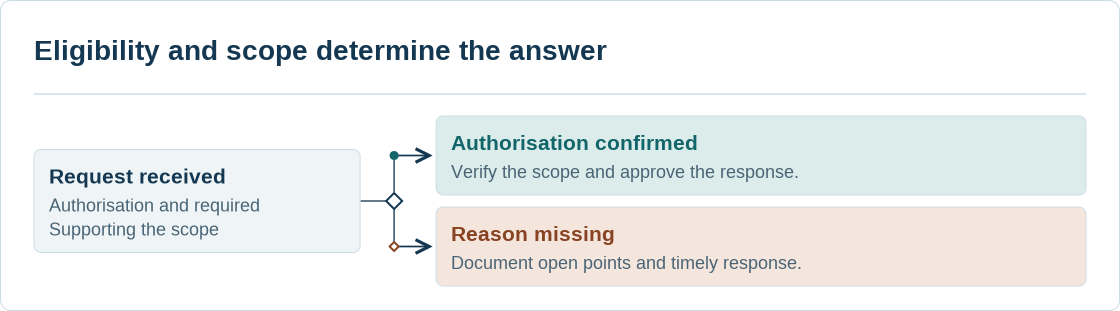
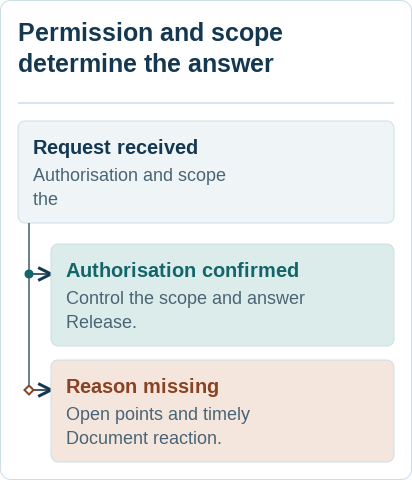
Authorisation and the necessary scope decide on the release. If the authorisation is unexplained, the competent authority shall determine the open decision and the timely response.
Check the decision in the example
Situation
In a service exercise, a confirmed test person receives a new factor. The old digital entry is still active in the directory. A second test request without sufficient proof of identity is correctly rejected.
Evaluation and decision
The restoration remains open because of the active old stock. The evaluation indicates the file reference and the expected follow-up result.
Negative test for your own operation
In the test environment, remove the old factor and repeat the same approved steps. In addition, check if the required clearance was available for the administrative test role.
- Audit record
- Comparison of the original finding and retest showing the changed condition, observed effect and closure decision.
Help for your decision
Arrange any effective authorisation to its purpose and release. Control the sequence, technically confirmed withdrawal and completeness of the test inventory.
Check allowances and prove withdrawals
Arrange any effective authorisation to its purpose and release. Control the sequence, technically confirmed withdrawal and completeness of the test inventory.
Outcome Verifiable rights coverage, open withdrawals and certified closure per audited population.
Read the instructions
Fictional example N16 · Ten privileged rights are in the extract. Nine are tested, for the temporary role lacks the technically confirmed withdrawal.
- Fixing the stock of rights Balance the inventory with the exported, effective status. Capture each right position individually.
- Practical proof of withdrawals Secure release, actual condition, post-test date and receipt per temporary role.
- Closing stock Compare number, open cases and evidence status with the released population.
Efficacy test and run release
Set minimum sample, hit rate and time limit. Calculate the individual observation and complete test run with set-off cases and negative sample separately.
Outcome Evaluation per criterion and per run. Incomplete samples, double criteria and missing counters are visible.
Read the instructions
Fictional example N08 · All the acquisitions observed are on time. The workbook shows the missed hit rate and the own meaning of the negative sample. Change the number and supporting evidence for individual tests for the counter-test.
- Fix Test Task Enter the run and criteria identifiers, appropriate scale and planned minimum scope.
- Document valid samples Calculate the amount of hits over all valid tests and use the longest measured reaction for time.
- Check the progress overview Compare number and types of criteria with the released order. Secure deviations and post-test order.
Legal basis for the verification task
Annex 11 · (EU) 2024/2690 · Access control
For administrative access, have permission, appropriate authentication and regular verification based on the usage path.
§ 30 BSIG · Risk management measures
For each relevant service, combine risks, ten fields of action, evidence and effectively verified effect. § 30 para. 3 gives priority to the technical requirements of the DVO for the providers covered there.
Annex 7 · (EU) 2024/2690 · Evaluate the effectiveness of measures
Link individual test criteria to the observed result and the verified handling of a deviation.

Next step for your editing level
Choose the work path that fits your open decision. The descriptions show what you start with and which proof you then hold.
Track roller changes until withdrawal
An open account was found during the check. They track withdrawal over all affected applications.
Starting point Authorized roll change, change time, setpoint and status of the affected applications.
To target changes in the role of employees with effective withdrawal.
Work result The actual withdrawal is documented by time or is scheduled as an open finding.
View the guideCheck accesses and system changes in operation
They work in parallel on tasks from the same department.
Starting point Select a service and a specific process to access, share or change the system.
The overview will classify further audit orders and aids.
Work result The agreed target state and the observed operating status bear the approval or an open finding.
View the guide

