
Verify restored backup data
The data are based on the data population, timing and technical decrease.
IMPLEMENTATION
EVIDENCE
Determine the usable data before collection
Plan the backup from a known data stand. Check which data is actually needed, which status is permitted and which sources prove completeness. Also record the intended protection and access options to backups.
Confirm the approved data loss and record an expected data set just before the reference point in the sample.
Compare recovered data with the source
Perform the test
Select a data level in the shared test area, determine the sum required and perform a specific sample. Compare date reference, total number and selected unique records with the confirmed reference. Capture the acceptance and follow-up observations.
- Acceptance criterion
- A second reviewer can follow the statement to the original evidence and the version checked. Record the evidence identifier or file reference with the decision.
- Evidence
- Evidence list recording original source, version, documented mapping and owner.
Result and further processing
Balanced recovery with evidence of data level, scope and actual professional use. The department can reject a justified gap or commission a complete follow-up.
- Acceptance criterion
- Justify applicability using evidenced activity or intended use, role and date. Assign an owner and due date to any unresolved assumption.
- Evidence
- Reasoned applicability assessment recording facts, reference, role, date and open assumptions.
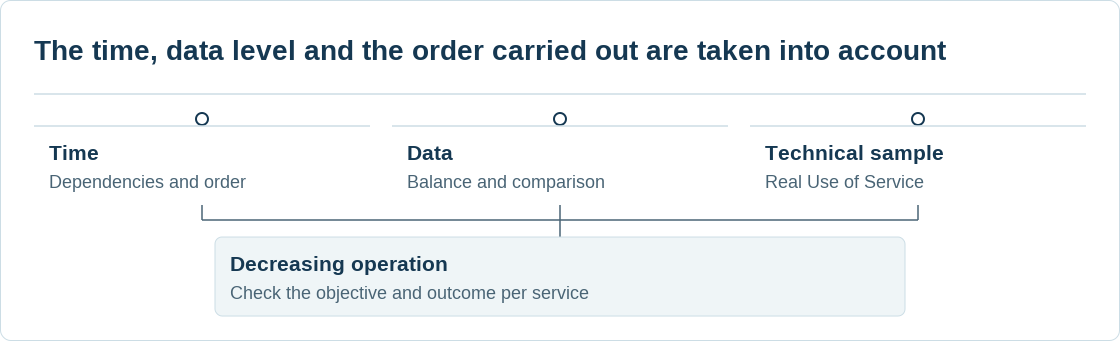
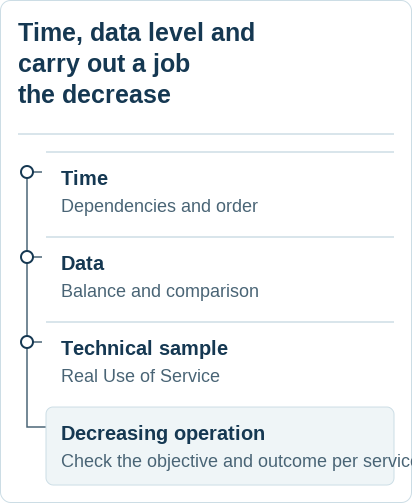
The technical resumption requires time, data and confirmed performance.
Decision and counter-test
Situation Plan the backup from a known data stand. Check which data is actually needed, which status is permitted and which sources prove completeness. Also record the intended protection and access options to backups.
Initial situation and observed findings
The run reports 5.000 recovered orders. Two entries are missing in the relevant period and two from the previous period are added. The total continues to be correct. The technical comparison recognizes the different identifiers and prevents premature release.
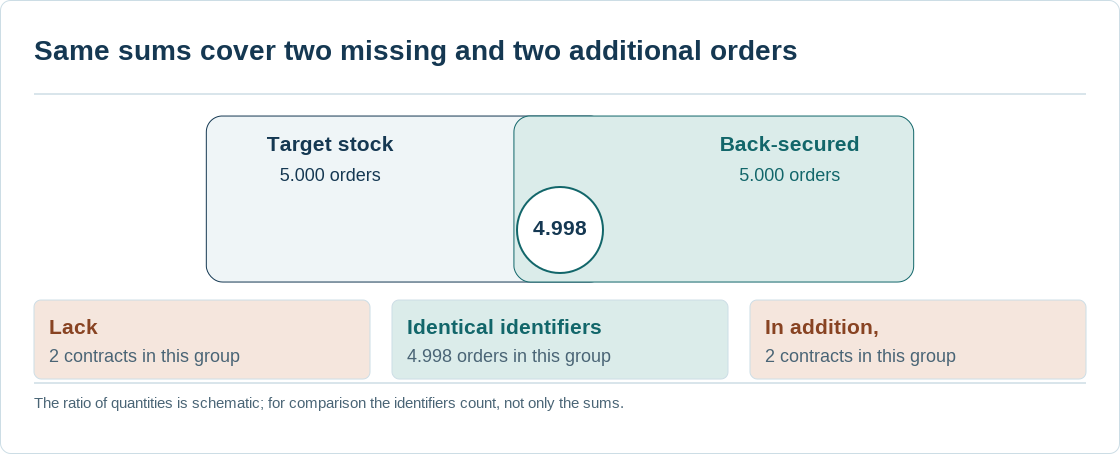
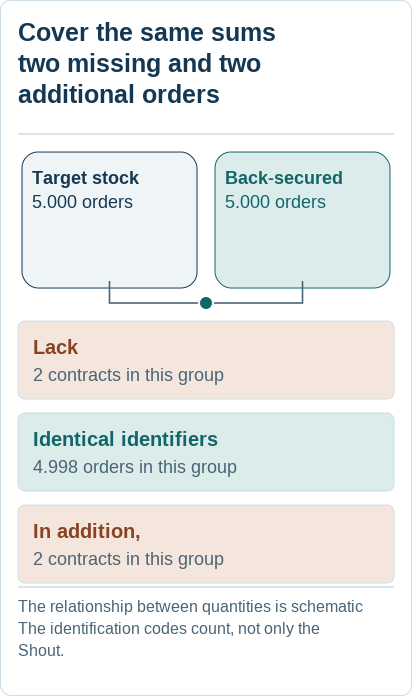
The figures show why the comparison of the identifiers gives a different statement than the total number.
Negative test
Compare the decrease with the target population per reference date for correct total number. After correction, check the same selection and the affected population again.
- Audit record
- Comparison of the original finding and retest showing the changed condition, observed effect and closure decision.
The own test bench
Restart and data loss. Check data integrity, partition process and release separately.
Restart and restoration
Restart and data loss. Check data integrity, partition process and release separately.
Outcome Evidence of the professional resumption or a reasoned open finding.
Read the instructions
Fictional example The first run takes 105 minutes instead of 90 minutes and delivers 9.998 data sets from 10.000. In the subsequent test, the subject sample must be time and content.
- Set target values Decide on permitted time, data loss and expected records at the service.
- Record readings Determine technical usability only with a executed process as achieved.
- Check data and release The following shall be used for the purposes of this Regulation:
Efficacy test and run release
Set minimum sample, hit rate and time limit. Calculate the individual observation and complete test run with set-off cases and negative sample separately.
Outcome Evaluation per criterion and per run. Incomplete samples, double criteria and missing counters are visible.
Read the instructions
Fictional example N08 · All the acquisitions observed are on time. The workbook shows the missed hit rate and the own meaning of the negative sample. Change the number and supporting evidence for individual tests for the counter-test.
- Fix Test Task Enter the run and criteria identifiers, appropriate scale and planned minimum scope.
- Document valid samples Calculate the amount of hits over all valid tests and use the longest measured reaction for time.
- Check the progress overview Compare number and types of criteria with the released order. Secure deviations and post-test order.
Legal basis for this task
§ 30 BSIG · Risk management measures
For each relevant service, combine risks, ten fields of action, evidence and effectively verified effect. § 30 para. 3 gives priority to the technical requirements of the DVO for the providers covered there.
§ 31 BSIG · Additional requirements for critical installations
Limit the systems that are relevant to the functioning of the affected installation. Check additional risk-appropriate precautions and the effectiveness of attack detection.
Annex 4 · (EU) 2024/2690 · Management and crisis management
Link technical effects, restoration goals, safety test and release. Work ends with a proven business process.

Deriving the next order from the result
First, take the decisive observation from the case. Then, based on your open question, choose whether you want to check your own process or play a comparable case.
Technical restoration technically decrease
Data and backup status are checked. The department must reduce the restored performance.
Starting point Approved time and data targets, minimum technical sample and raw data of restart.
Confirm a depreciable minimum power with time value, data level and responsible release.
Work result A dated release or an open finding per time, data level and usability.
View the guideTrying to Resume a Service
You must jointly examine time, data and technical resumption.
Starting point Minimum required performance, time and data objectives, reference stock and responsible department.
The same exercise is used to demonstrate the re-start time, data level and technical acceptance.
Work result A reasoned decision to resume with measured time value, data level and subject sample.
View the guide

