
Establish impact and awareness time
Evaluate an event from the first indication to the confirmed materiality decision continuously.
IMPLEMENTATION
EVIDENCE
From the first signal to the evidence
Secure time and affected service for the first signal. Knowledge of a significant incident must be comprehensible based on the facts then known. Check possible serious operating failures, losses and significant damage to third parties according to the relevant definition. Additional assessment measures have to be taken into account separately for recorded providers.
Enter the event in UTC with affected performance. Complete each confirmed state of affairs in a separate line with receipt and time.
Evaluate and hand over significant information to the Reporting Office
Perform the test
Document the available observation, performance affected, actual or possible effects, tested alternative and confirmed decision on each new situation. Plan the next decision date if information is missing. Secure your own transmission of the first reporting stage as far as it becomes necessary.
- Acceptance criterion
- A second reviewer can follow the statement to the original evidence and the version checked. Record the evidence identifier or file reference with the decision.
- Evidence
- Evidence list recording original source, version, documented mapping and owner.
Result and further processing
Chronology with its own explanatory statement of relevance, established time of knowledge and open or confirmed action. The Reporting Office receives the date on which significant effects were sufficiently substantiated, as well as the open information and its next clarification date.
- Acceptance criterion
- Observe the intended effect in a defined transaction. Record how an absent effect changes acceptance or the follow-up action.
- Evidence
- Test record with transaction, expected business result, observed effect and finding decision.
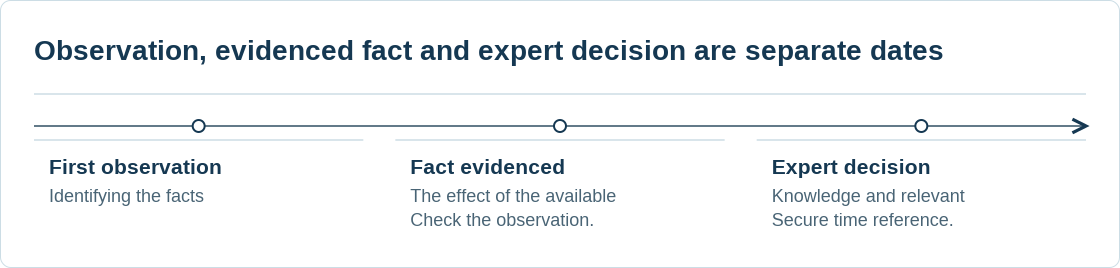
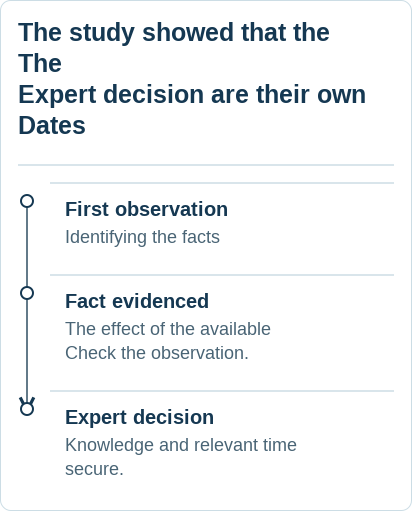
The scheme distinguishes the first observation, the established state of play and the technical decision. The legally relevant time base is shown by the applicable procedure and the facts available at this time.
Decision and counter-test
Situation Secure time and affected service for the first signal. Knowledge of a significant incident must be comprehensible based on the facts then known.
Initial situation and observed findings
At 08:10 the platform reports a malfunction. At 08:25 clock a significant effect on the performance is confirmed, while financial information remains open. The evaluation records the hardened effect and its knowledge evidence. A misunderstandable later input does not replace the previously proven time of knowledge.
Negative test
Add a second confirmed effect to a later state of affairs. For the time limit, continue using the earliest confirmed relevant knowledge of the path actually affected.
- Audit record
- Comparison of the original finding and retest showing the changed condition, observed effect and closure decision.
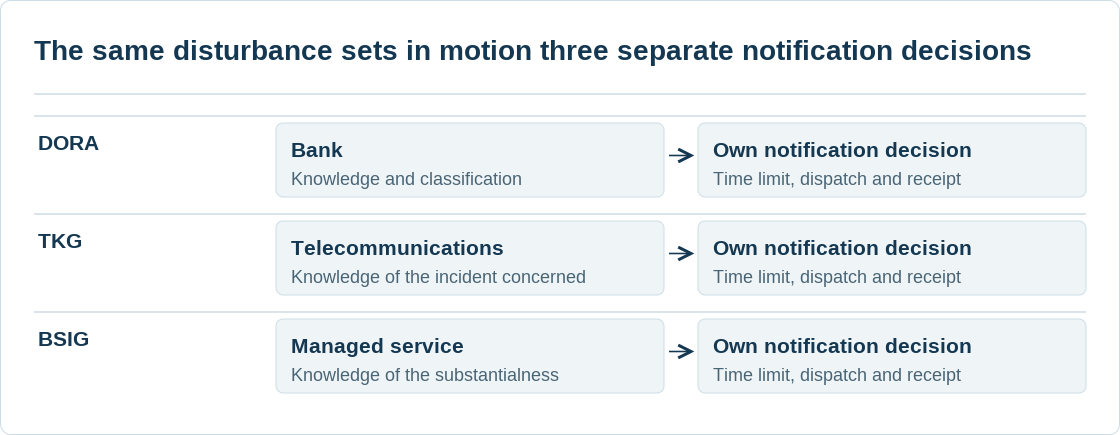
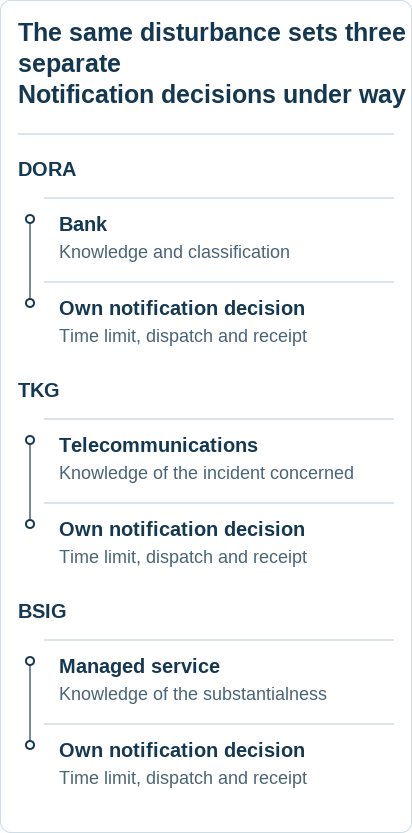
An event is assessed separately according to DORA, TKG and BSIG. Each timeline has its own starting point.
The own test bench
Follow the first hints, confirmed development and own relevance decision time per affected performance.
Incident Triage and Confirmed Knowledge
Follow the first hints, confirmed development and own relevance decision time per affected performance.
Outcome A robust decision-making protocol from the first signal to the earliest evidenced relevant knowledge.
Read the instructions
Fictional example N21 · Message from the platform at 08:10 clock, confirmed serious impact at 08:25 clock. Later facts remain visible in the course of the process.
- Separating signal and knowledge Record evidenced facts and UTC time per performance affected.
- Technical examination of criteria Keep a clear record of the legal basis, concrete alternative and lack of information.
- Reporting decision handed over Secure the earliest confirmed knowledge in the event overview.
Decision of incident and reporting deadlines
Support knowledge, reporting levels and recipients. Calculate the 24-hour and 72-hour limits as well as the monthly receipt.
Outcome Chronology with separate right triggers, maximum limits, shipping and reception.
Read the instructions
Fictional example A significant incident is reported around 09:30 UTC. The incident report is sent 50 hours later. The conclusion follows calendarly from the actual message. In case of an ongoing incident, the progress must be made first.
- Evidence Identify the relevant time, service concerned, competent body and facts.
- Select stages and exceptions Document regular hours profile, trust service review and individual process separately.
- Check calendar limit and shipping Technically confirm the monthly limit and special cases. Organise immediate transmission and secure all receipts.
Legal basis for this task
First check for this task
§ 2 BSIG · Concepts and relevance
Arrange an observation based on the actual impact and ability to cause damage. Capture relevant terms and facts at the known time.
§ 32 BSIG · Reporting of significant incidents
The early first report and the incident report are linked to the knowledge of the significant incident. The monthly reference follows the actual reported incident report. In case of a continuous incident, the reporting level changes.
Art. 23 NIS2 · Reporting of significant security incidents
Determine the time of knowledge of the relevance and the responsible reporting route. Evaluate special periods and the applicable technical criteria per provider separately.

Other official references1
- Art. 3 DVO (EU) 2024/2690 · Common criteria for relevance (opens in new tab)
Technische Vorgaben · (EU) 2024/2690
Check the alternatives in paragraph 1 and the specificities of planned maintenance. Direct losses are driven by the lower limit of EUR 500.000 and 5% of total sales in the previous year.
Deriving the next order from the result
First, take the decisive observation from the case. Then, based on your open question, choose whether you want to check your own process or play a comparable case.
Report an incident separately after DORA, NIS2 and TKG
Use a common event identifier for technical observations. In addition, keep track of the reporting role, legal basis, level of knowledge and confirmed classification for each company concerned and every performance involved.
The incident meets several regulated services. Check knowledge time and reporting path for each path.
One event, three professional classifications and different time-limits for bank, telecommunications and managed service.
Your decision Determine your own starting point for each reporting route and confirm the dispatch of the next message.
Work through the caseReport security incident
An event is taking place and you need to clarify the relevance and deadlines.
Track knowledge, early initial reporting, incident reporting and closure on the basis of the same event.
View the guide

