
Incidents in trust services
Service delimitation and affected user group.
IMPLEMENTATION
EVIDENCE
Set the relevance and reporting clock for trust services
The impact on the specific service and, where appropriate, on trusted parties is decisive for trust services. Article 14 of the implementing regulation supplements the common criteria. Art. 23 para. 4 NIS2 also contains a special rule on the reporting level of trust services. Pre-determine the applicable national implementation and the official route.
Perform the verification task
Determine the Service of Trust
Separate functions and roles of the provider. Confirm for the incident which performance and which trusting parties may be affected.
- Acceptance criterion
- Observe the intended effect in a defined transaction. Record how an absent effect changes acceptance or the follow-up action.
- Evidence
Service delimitation and affected user group.
Consolidate the impact and evidence
Secure test and exhibition status, available observations and affected time windows. Decide on the appropriate facts and document the state of knowledge at that time.
- Acceptance criterion
- Show which discrepancy changes impact on the affected service or product. Match it to an action and a responsible decision on residual risk.
- Evidence
Considerable note with confirmed facts and open points.
Pre-allocation of reporting levels and recipients
Compare the special rule of policy and actually applicable national specification with the reporting authority. Use the valid reporting method and record the first level reached as well as the meaningful incident report separately.
- Acceptance criterion
- Justify applicability using evidenced activity or intended use, role and date. Assign an owner and due date to any unresolved assumption.
- Evidence
Confirmed assignment per legal basis, stage and shipment.
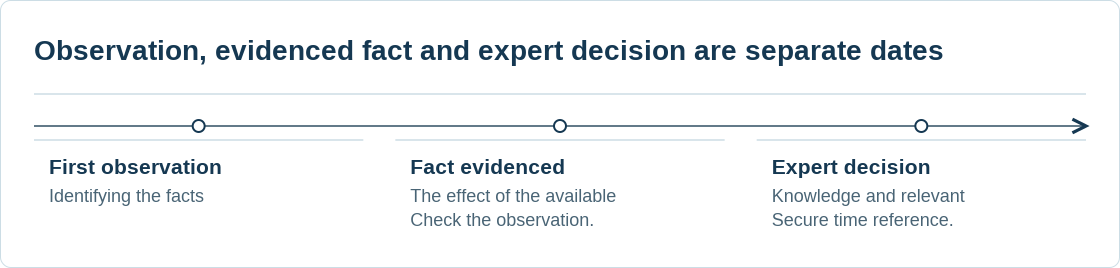
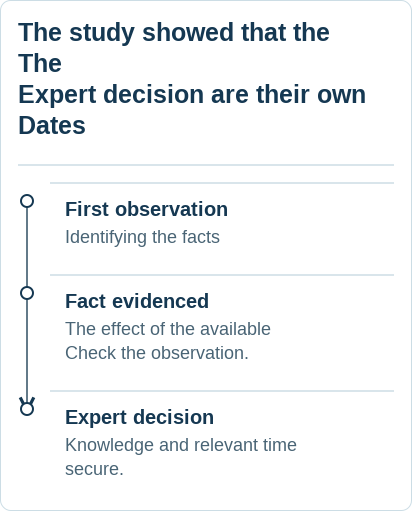
The scheme distinguishes the first observation, the established state of play and the technical decision. The legally relevant time base is shown by the applicable procedure and the facts available at this time.
Starting position, assessment and counter-test
Situation In the case of trust services, the impact on the specific service and, where appropriate, on trusted parties is decisive. Article 14 of the implementing regulation supplements the common criteria. Art. 23 para. 4 NIS2 also contains a special rule on the reporting level for trust services.
Situation
At HanseWerk Vertrauen, the status of a registered service is checked at 08:00 on Tuesday. At 08:18 the service team confirms which trusted parties are affected. The standby plan provides for an internal handover of the technical incident report within 24 hours, while the legal team checks the national reporting channels and relevant rules.
Evaluation and decision
The service responsibility confirms the service concerned and the observed effect separately from the general system alarm. The reporting path receives a documented knowledge time and the mandatory level. The internal transfer date remains clearly marked as operational target value.
Negative test for your own operation
In the exercise, restore the reliable status check via an independent confirmed path. Re-examine relevance and the confirmed time base.
- Audit record
- Comparison of the original finding and retest showing the changed condition, observed effect and closure decision.
Help for your decision
Follow the first hints, confirmed development and own relevance decision time per affected performance.
Incident Triage and Confirmed Knowledge
Follow the first hints, confirmed development and own relevance decision time per affected performance.
Outcome A robust decision-making protocol from the first signal to the earliest evidenced relevant knowledge.
Read the instructions
Fictional example N21 · Message from the platform at 08:10 clock, confirmed serious impact at 08:25 clock. Later facts remain visible in the course of the process.
- Separating signal and knowledge Record evidenced facts and UTC time per performance affected.
- Technical examination of criteria Keep a clear record of the legal basis, concrete alternative and lack of information.
- Reporting decision handed over Secure the earliest confirmed knowledge in the event overview.
Registration deadlines for DORA, NIS2 and specialist law
Calculate the basic periods of time for the same event from the respective knowledge, classification and transmission times. Run DORA and national paths in separate sheets.
Outcome Time and receipt chains per legal entity and reporting obligation. Each reporting stage has its own time reference.
Read the instructions
Fictional example N11 · The dispatch of the DORA initial report sets the 72-hour reference for the intermediate report. In the TK and MSP thread, knowledge of the significant incident determines the 72 hours. N12 adds EnWG and critical water system.
- Confirm Concern and Classification Link the same event identifier to service, jurisdiction, knowledge and each path of confirmed classification.
- Check shipping times and steps Capture actual shipping times. Use the last relevant intermediate message or the national No. 2 message matching the path.
- Confirm calendar and transmission Check work calendar, exception and progress reference if necessary. Link the decision to the relevant reporting channel.
Legal basis for the verification task
First check for this task
Art. 14 DVO (EU) 2024/2690 · Considerability of trust services
Also include the trusted parties in the evaluation. Keep track of the relevant trust service and legal special criteria including time.
Art. 3 DVO (EU) 2024/2690 · Common criteria for relevance
Check the alternatives in paragraph 1 and the specificities of planned maintenance. Direct losses are driven by the lower limit of EUR 500.000 and 5% of total sales in the previous year.
Art. 23 NIS2 · Reporting of significant security incidents
Determine the time of knowledge of the relevance and the responsible reporting route. Evaluate special periods and the applicable technical criteria per provider separately.

Other official references1
- § 32 BSIG · Reporting of significant incidents (opens in new tab)
Deutsche Anwendung · BSIG
The early first report and the incident report are linked to the knowledge of the significant incident. The monthly reference follows the actual reported incident report. In case of a continuous incident, the reporting level changes.
Next step for your editing level
First, take the decisive observation from the case. Then, based on your open question, choose whether you want to check your own process or play a comparable case.
Deriving progress report and final notification
The relevant incident report has been submitted and you want to check the subsequent reporting level.
Starting point The dispatch record of the incident report, confirmed processing status and measure level with time basis.
Connect status, affected dispatch and processing end with evidence per reporting stage.
Work result Progress report or final report with comprehensible date and released version.
View the guideApplying EU standards for digital providers
They work in parallel on tasks from the same department.
Starting point Description of service, proof of operation, role of provider and user and event data if applicable.
The overview will classify further audit orders and aids.
Work result Technical requirements and incident criteria are assigned to the service actually provided.
View the guide

