
Incorrect defaults on a new production line
The delivery profile differs for two devices of a new line.
CONFORMITY
MAINTENANCE
Starting position and test order
A manufacturer of radio meters complements the production with a second line. According to the manufacturing instructions, both lines deliver version 4.3 with a limited delivery profile. The new line uses another station for the test run for the preparation of the device profile.
Six devices of the previous line correspond to the release. In the new line two out of six first editions differ in profile setting, although all devices report the same firmware. The output file contains the unique serial identifiers.
Compare test data and consequences
Previous line
- Scale
- 6 matching issues
- Observation
- 6 out of 6 occupied
- Follow
- Sample verified
New line
- Scale
- 6 matching issues
- Observation
- 4 out of 6 occupied
- Follow
- Investigate the line concerned
Firmware
- Scale
- Previewed version 4.3
- Observation
- Report 12 out of 12 4.3
- Follow
- Check delivery profile individually
Samples from old and new production
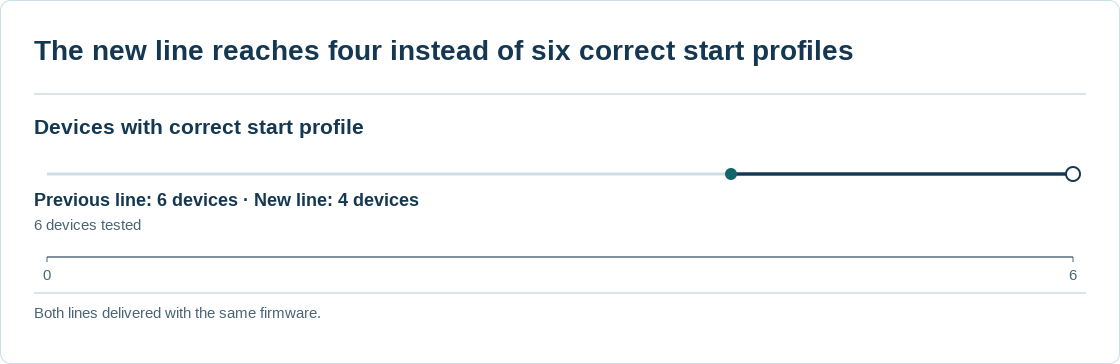
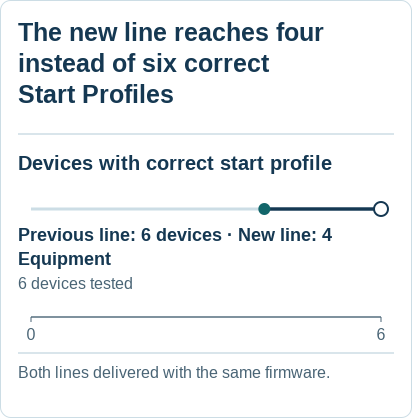
Limit the result by reference to the serial identifier. Repeat the output sample on the affected line.
Edit the test step by step
Track the confirmed initial profile to line
Open the statement for both issues and compare firmware and actual start profile per device.
Testable evidence Line-by-line assignment of the twelve output units.
- Acceptance criterion
- A second reviewer can follow the statement to the original evidence and the version checked. Record the evidence identifier or file reference with the decision.
- Evidence
- Evidence list recording original source, version, documented mapping and owner.
The two deviations are correctly limited
Return the serial identifiers to the station and the profile used there. Check independently whether further batches are affected.
Testable evidence The extent of the error, not the general nature of the release.
- Acceptance criterion
- The item under review and the documents refer to the same approved version. Record obsolete evidence as a separate discrepancy.
- Evidence
- Versioned mapping of item, source and approved version with any discrepancy recorded.
The corrected series produce controlled
Repeat the output sample on the changed line and check the start profile before releasing the specified inventory.
Testable evidence Six current post-test documents or a well-founded, open series.
- Acceptance criterion
- Reconcile expected and observed records using the same identifier. Resolve missing, duplicate or unmatched records individually.
- Evidence
- Reconciliation sheet recording the identifier, expected and observed mapping, source and finding.
Worked decision and negative test
Decision in case
The firmware identifier always matches the sample. Two devices of the new line still have a different delivery profile. The manufacturer withholds the unexplained serial scope and checks the actual cause of the profile setting.
The repetition concerns the corrected output and the corresponding line. A test at the original line supports their result and does not replace the new output sample.
Counter-sample and impact
Provide six suitable laboratory samples with manually adjusted profile. Check whether these tests represent the real device output on the new line. Without this proof, serial release remains open.
- Audit record
- Comparison of the original finding and retest showing the changed condition, observed effect and closure decision.
Templates and worksheets
Sample per product profile and series
Compare planned quantities, actual valid samples and passed cases per delivery profile.
Outcome Tested sample size with open profiles and scheduled repetition.
Read the instructions
Fictional example Six out of six samples are in place.
- Identify the starting situation Deriving groups and occasions from product and delivery stock.
- Run the test Determine the validity and result per group.
- Secure decision and evidence Sample open profiles in the affected line or environment.
Official sources
Cyberresilience Regulation in text
Use the article or attachment that regulates the task to be solved.
Responsibility of manufacturers of digital products
Compare preparation, product release and care with your own manufacturer role.
Guidelines for the application of CRA
Check inter alia the remote processing, expected use and delimitation to other legal acts.

What depends on your result?
Ensure conformity in series production
Transfer the same test criteria to your own product and save the different starting data.
View the guideClear type modification with notified body
If the modified structure may affect the approved version or conditions of the certificate, you shall involve the competent notified body.
View the guide

